Rosie: A New Musical - Adelphi Theatre: I can honestly say I’ve never seen anything like it
⭑ - 10% • 4 minutes 32 seconds read time
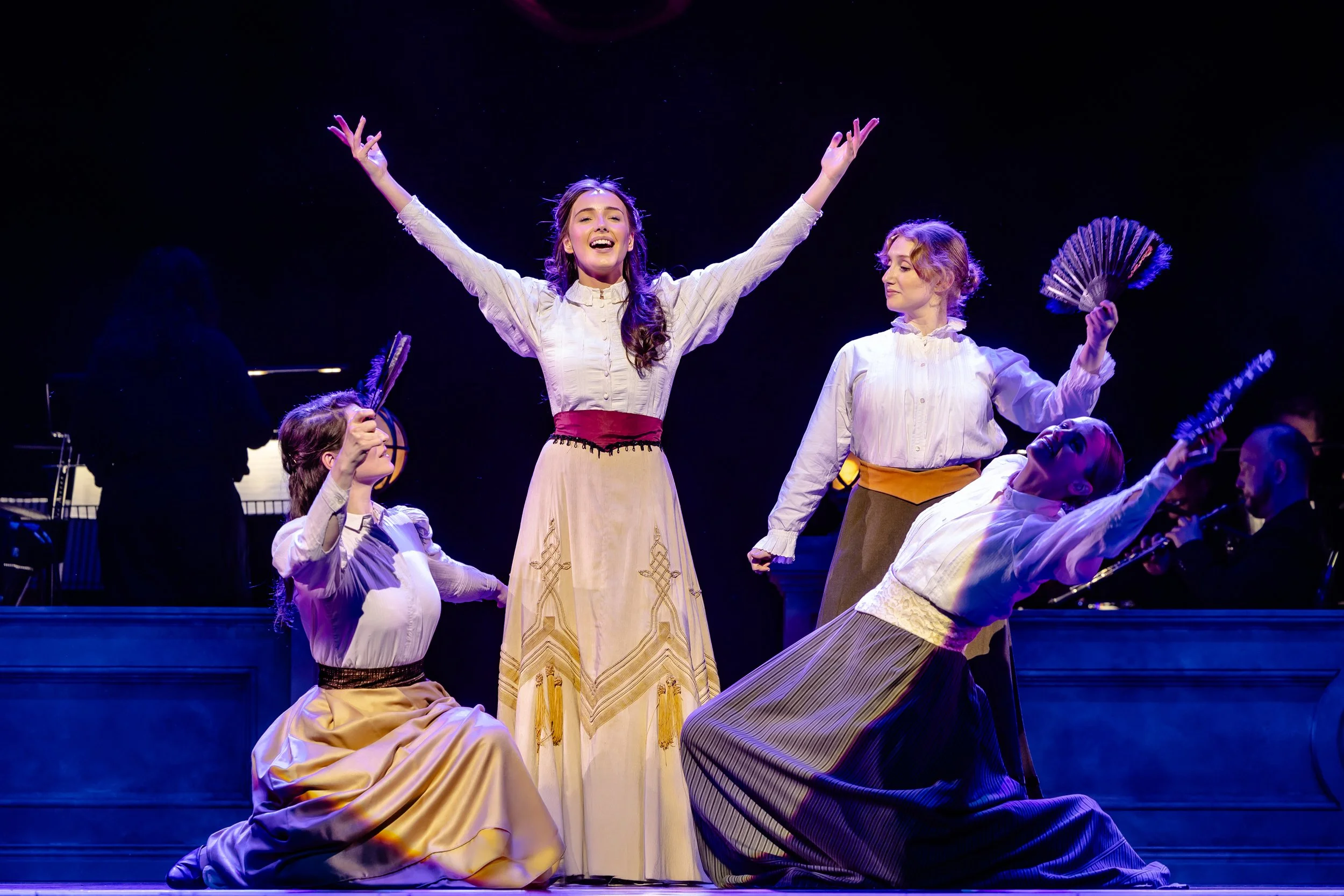
Rosie: A New Musical had its world premiere this week at the Adelphi Theatre in a one night only semi-staged production. With a packed line-up of acting talent in the cast, I imagine I was not the only one walking into the theatre that night expecting to be served a delectable treat to sink our teeth into.
What we got instead was…not that. To put it bluntly, no part of this was ready for public consumption, let alone up to a standard anyone should have been asked to pay for.
Before I get into why, I want to preface this by saying none of this is at all a reflection on the cast. All of whom did the absolute best they could with material that should never have been read outside of a workshop room. It is in fact a testament to the talent and skill of every one of them that there were moments to laugh at or applaud at all. Each of them should be proud of quite how well they held their own against the odds. Because without them, I’m not sure this had any redeeming qualities.
Rosie tells the story of Rosie Boote, a real woman who was raised in an Irish covent from the age of 8 after her father died unexpectedly. And this in the show is where my problems begin. We meet Rosie at 8, she’s dropped to the convent and we time jump 10 years and she’s 18. And also, somehow, still English sounding. She’s spent 10 years in Ireland raised by Catholic nuns, but she steadfastly hung on to her English accent? The lack of attention to detail was the beginning of what continued to snowball.
The book is written by Chris Broom, and I’ll be completely honest - I’m not sure he’s ever had a conversation with another person before. The dialogue was so clunky, so unnatural, that seasoned actors were tripping up and stumbling over lines because they had no flow. Every point was laboured, what could have been simply “you have a gift from God, I implore you to use it” is instead a lengthy speech that essentially just repeats the same sentiment. And right when you think it’s surely done, there’s always just one more unnecessary addition.
But fascinatingly, given quite how much was said, really nothing was said at all. Rosie Boote, Catholic convent girl from Ireland who leaves her life behind to move to London seeking a life on the stage, falls in love with an English protestant man who also happens to be part of the aristocracy, and tears apart social convention of the time when she marries him and becomes a Marchioness. It’s a story filled with drama, and yet this production had no stakes.
This was a violent time to be Irish and to be Catholic, under British rule, the Irish people are living in the shadow of the genocide the Brits call the Great Famine, the population halved in just 40 years. An Irish Catholic marrying into English aristocracy was unheard of. In this production, that is given a throwaway line of acknowledgment “worse still, I’m Catholic” and never mentioned again. The real issue with their union is that she’s an actress!
A feat she achieves on her very first night in London, by simply approaching a West End producer in a bar, asking for an audition, and being given one the very next day! She rocks up, sings one song - a song her late Papa wrote for her - and is immediately given the lead. And then a scene later, when the girls who actually have been grafting for their place on stage point out it’s a little jarring she just walks in and gets handed what she wants, we are made to listen to an impassioned speech about how that’s not fair, how hard Rosie has apparently work, and a “you wouldn’t be saying this in front of the producer” - whilst the producer stands literally two paces away.
But they’re right, Rosie didn’t work hard, Rosie didn’t come up against any significant trials or tribulations - everything she wanted, she got by simply asking for it. The one blip in her path lasts for all of 5 minutes, before being resolved exactly as she wanted it to be. And it made for an incredibly dull watch.
A dull watch made even duller by a score that was almost entirely ballads. Interestingly, there was no melodic through line, and yet somehow they all managed to sound exactly the same. And that exactly the same sound was like a rip off of Evermore from Beauty and the Beast and Out There from The Hunchback of Notre Dame. And every single one had this same irritating feature where it would build to a huge belt, and then be followed by nothing, empty space for what felt like an eternity but was in actuality around 15 seconds. There was no beat, there was no heart, it was just empty, soulless, passionless. By the time we got to our 6th ballad of Act 1, I was pleading for interval to arrive. By the time we got to the third ballad of Act 2, I was calling on my memory of Schitt’s Creek episodes, playing them in my head to get me through to the end.
The whole thing felt like self indulgent upper class English drivel. Any part of Rosie Boote’s story that could have provided meat and substance, was removed and replaced with stiff upper lip nonsense. Classist jokes - that the entire audience guffawed at, but when I was the only person of colour in the entire stalls, that’s hardly surprising - ode’s to king and country, a trip to Africa just for a 30 second rant about how awful Africa is for the British soldiers there to fight the Boer War. And having me, Irish, sit through an entire rendition of Our Homeland? On St Patrick’s Day? For no reason at all? Bordered on a hate crime.
Honestly, I feel sad for Rosie Boote. By all accounts her life was a fascinating one, and a story of triumph in the face of giant odds. And to be reduced to this? Great women can’t be free from average men even in death it seems, it’s quite unbelievable. What I can say, with my hand on my heart, is that I have genuinely never seen anything like it.