Intimate Apparel - Donmar Warehouse: Lynn Nottage and Lynette Linton are a partnership for the ages.
⭑ ⭑ ⭑ ⭑ ⭑ - 93% • 6 minutes 32 seconds read time
Sometimes theatre arrives quietly, almost unassumingly, and winds up feeling like it’s been stitched into your being. Intimate Apparel at the Donmar Warehouse is one of those. Written by the incomparable Lynn Nottage and directed by the endlessly brilliant Lynette Linton, this latest collaboration reunites the duo behind Sweat (2018) and Clyde’s (2023) to deliver a work that is at once gentle and devastating, and as delicate as it is piercing, speaking volumes by leaning in close and whispering truths.
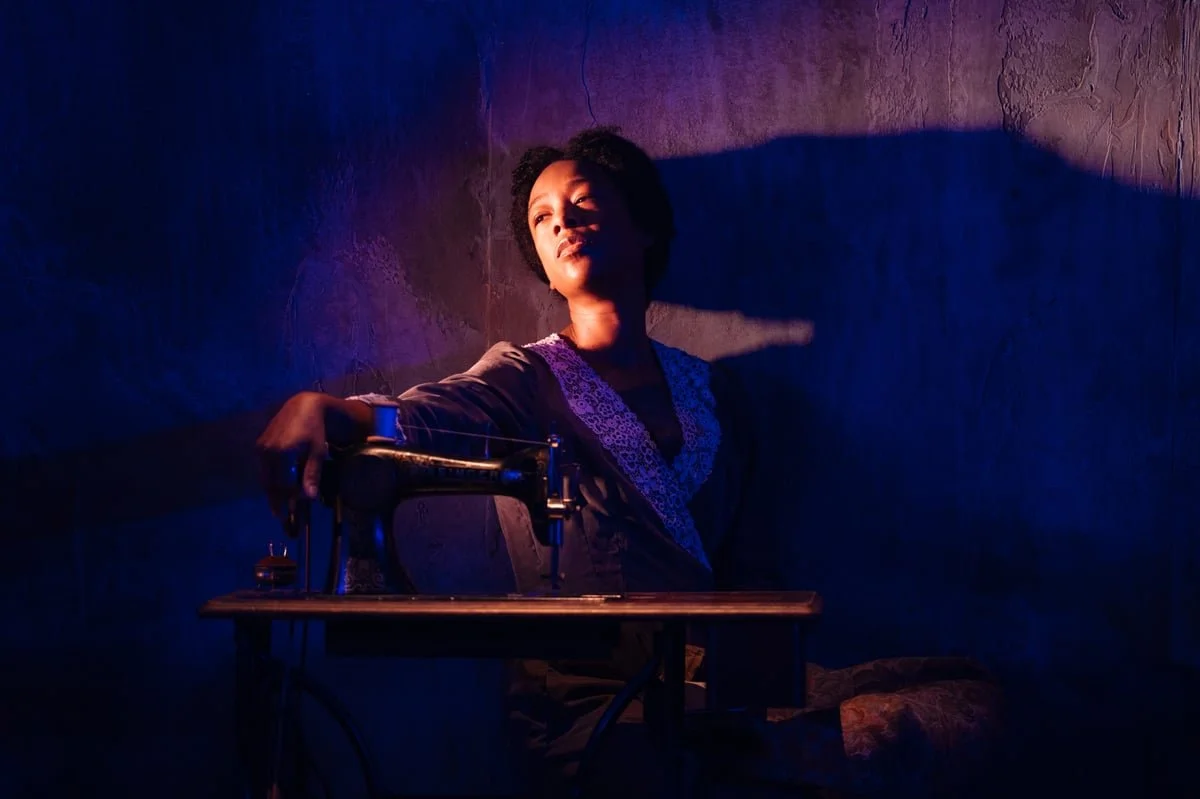
Set in 1905 New York, Intimate Apparel tells the story of Esther Beaumont, a Black seamstress whose talent with a needle is extraordinary. She sews extravagant, elegant lingerie for women across the city and has built a life of quiet, steady success. For eighteen years she has saved, dreaming of a future where she owns her own shop – a place where Black women can come and be seen, celebrated, and adorned in beauty that matches their worth. She has vision. She has skill. She has determination. But she has never been in love. And in that absence she feels the ache of loneliness creeping in. When a stranger begins writing to her from afar, Esther dares to hope that love – and perhaps fulfilment – might finally be within reach.
To me, that is the crux of this story. Loneliness. Women wanting so deeply to be seen, and to be loved for what is there to see. Wanting to be someone, to step above where they began, to be accepted. But of course, Lynn Nottage – with her signature precision and clarity – doesn’t just tell a love story. She tells a human story. One rich in humility, complexity, and truth. It’s a story about womanhood, about sisterhood, and about the roles that men have played, and continue to play, in shaping those identities. And the somber reality that whilst there may well be a few good men, the marks men leave in the stories of women are too often marks of pain, of control, marks inflicted, not marks lovingly sewn in by the hand of an expert craftsman.
Every woman in this play is lonely. And every woman in this play thinks a man is the solution to it. Not because they are foolish or naive, but because they have been taught to think that way – by society, by circumstance, by systems that benefit from their submission. Mrs Dickson is a widow who was lonely when her husband was alive, and lonely now he is gone. She didn’t marry for love. She married for stability, because women like her had no access to bank accounts or home ownership without a man. Her marriage was a strategy for survival, not a sanctuary. Claudia Jolly’s Mrs Van Buren is trapped in a different kind of arrangement – a wealthy, loveless marriage that demands her silence and performance. She resents her husband’s touch and the absence of it. Resents the expectations placed upon her. No matter how much she bends, or squeezes, or breaks, she will never be enough for him. There’s a quiet suggestion that she may be a lesbian, forced to conform, hide, and lie simply to exist. She’s a wife, and she’s lonely. And then there’s Mayme.
Faith Omole gives a breathtaking performance as Mayme, a sex worker who wears a mask of confidence, but who is deeply bruised by the reality of being seen only as a body, not a soul. She acts like it doesn’t affect her. But she, too, wants to be loved. To be someone. And when a man begins to want more than just an hour of her time, she dares to imagine a different future. One where she is not just used, but cherished. Omole finds such richness in the contradictions of Mayme – pride and vulnerability, chaos and calm, loyalty and self-protection – and she does it all with humour and heart. Her portrayal is both powerful and tender, a full spectrum of womanhood laid bare.
And Esther – oh, Esther. She is so lonely that she is willing to give up everything to try and hold onto a man. Her friendships, her home, her body, her money, even her dreams. All laid on the altar of romantic hope.
Because what is a woman alone? That question hovers over every scene. It’s the question women have been made to wrestle with for generations, in societies built on patriarchy and heteronormativity. To be single is not simply to be solitary – it is to be seen as incomplete. It’s a radical act for a woman to truly not feel any pressure to be on the arm of a man. And it’s fascinating that the lack of that, is considered a woman alone. But Nottage holds that question up to the light and lets us see it differently. None of these women are truly alone. They are connected to each other – in friendship, in support, in shared dreams. The love they seek in men, they often already have in their communities of women. It’s just been taught to feel like it’s not enough.
One of the most moving threads in the play is the relationship between Esther and Mr Marks, the Jewish fabric shop owner with whom she shares a deep, unspoken bond. Alex Waldmann is magnetic as Mr Marks – earnest, thoughtful, passionate about his textiles, unsure of himself and unsure of Esther, yet drawn to her with undeniable force. Their connection feels as if it lives in the silence between them. They speak the same language. See the world through the same lens. Their hearts race to the same rhythm. But he is not a Black man, and she is not Jewish, and so they cannot. At least, they think they cannot. Culture is central to who they are – but culture, Nottage reminds us, is not all we are. It raises the question: do the lines we draw around identity sometimes stop us from stepping into possibility?
Lynette Linton’s direction is remarkable – emotionally intelligent, restrained, and deeply in tune with the story’s heartbeat. She doesn’t impose herself on the text, but lets the play unfold with an elegant confidence that speaks volumes. There’s a natural rhythm to her choices, a trust in the power of silence and stillness, and a refusal to rush emotion.
She understands when to hold a moment and when to let it go. The flow of the production feels like memory – drifting, meandering, occasionally sharp – and she handles those shifts with subtlety. The minimalist set becomes fluid under her direction, scenes melting into one another in a way that reflects the quiet passage of time, and the slow unravel of a woman’s life.
The projections are used beautifully – not simple decoration, there just because. They are emotional punctuation. Words appear and vanish, engulfing the stage like the promises and expectations that fill Esther’s world. A visual experience of the way pretty words can wrap you up, blind you, but ultimately are just that. Pretty words, without action behind them.
What’s most noticeable, though, is the care Linton shows for the women in this story. She directs with generosity, allowing space for contradictions, for flaws, for longing. Her lens is never judgemental. She simply lets them be – and that, in itself, is powerful. Her collaboration with Nottage continues to be one of the most quietly formidable in contemporary theatre.
Samira Wiley leads the production with grace, generosity and raw emotional clarity. She steps fully into Esther’s shoes and walks her journey with heartbreaking honesty. Esther is not a showy character – her power is quiet, her pain internalised – but Wiley makes her riveting. There is strength in her stillness, heartbreak in her silences. Watching her unravel and rebuild is a privilege.
Kadiff Kirwan has perhaps the most difficult task in the piece, as George Armstrong – Esther’s suitor. He must be loved before he is loathed, and must earn that love from the audience in a very short space of time. Kirwan walks that tightrope brilliantly. The shift from warmth to manipulation is swift, but never abrupt. Nicola Hughes brings a grounded warmth to Mrs Dickson – a woman who gives and gives, even when no one sees her fully. And Claudia Jolly is quietly heartbreaking as Mrs Van Buren, her performance capturing the essence of a woman cracking under the weight of repression.
But Faith Omole’s Mayme is the standout. She plays her with so much nuance, so much feeling. There is armour, yes – but underneath it, there’s a tender, aching desire to be seen and safe. And she still finds humour amidst it all. Her performance is one I shall be thinking about for a long time.
Intimate Apparel is that sort of perfect storm where an exceptional writer crafts just the right story, that lands with just the right director, who directs just the right cast, and everyone involved speaks the same language. It is much rarer to find than one might think. This is not just a story set in 1905, a period piece with no present day footing. It is a story about now. About how we love, how we survive, how we dream. About the women we overlook, and the ones who refuse to be forgotten.